Work lives in people
Critical steps depend on what one employee remembers, knows or keeps in an inbox.
 Free 30-Min Review ↗
Diagnose before you buy
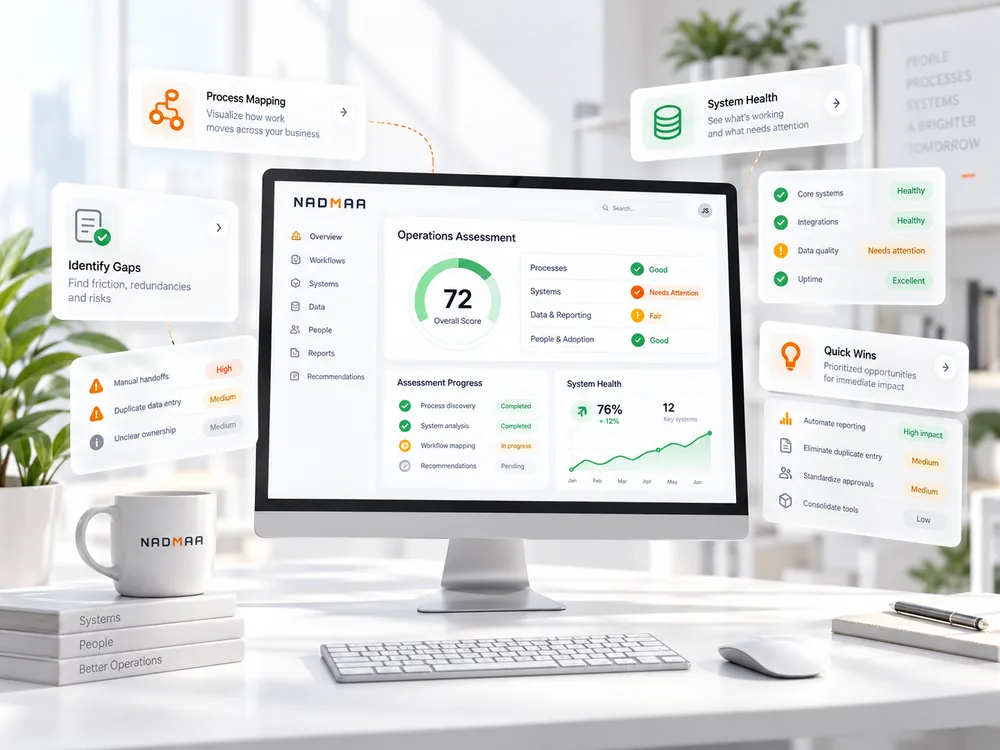
A Business Systems Assessment maps how work actually moves, shows where time and control are being lost, and gives leadership a practical order for what to fix.
30 minutes · No presentation needed · Bring the process that keeps breaking.
In plain language
It is a structured review of workflows, handoffs, data, systems and workarounds. The result is a prioritized view of the operating problems worth fixing before you buy or build more software.
Recognize the pattern
Look for repeated workaround behaviour: people re-enter data, build side spreadsheets, chase approvals or cannot see status without asking someone.
Critical steps depend on what one employee remembers, knows or keeps in an inbox.
The same customer, order or project information is entered repeatedly across tools.
Your team bends its process around software limitations or builds side spreadsheets to compensate.
Reporting requires someone to collect, reconcile or interpret information manually.
Documents, status updates and simple requests still require a person to respond.
There are plenty of tools available, but no evidence-based sequence for what to change.
Before → after
Instead of treating each complaint as a separate software request, the assessment connects them to the underlying workflow and ownership gaps.
Departments solve problems locally. Information moves through email, spreadsheets and individual knowledge. Management sees the result after the fact.
Leadership can see which processes matter, where control breaks down, what should stay and what should be redesigned, connected or automated.
What you get
The goal is a decision tool for leadership, not a generic audit report.
A clear view of how the most important operating journeys currently move across people and systems.
The manual steps, duplicate entry, delays, control gaps and dependencies creating operational cost or risk.
What your existing applications do well, where they are being stretched and where integration or replacement is justified.
A sequenced plan that separates quick wins from larger transformation work and ties each recommendation to a business problem.
Questions buyers ask
Clear answers before you decide whether a deeper Blueprint or implementation is necessary.
Need more than an assessment?
The Business Systems Blueprint takes the findings further into future-state process maps, requirements, architecture and an implementation roadmap.
Next step
Bring the workflow, system or recurring issue. We will help identify the highest-value next step.
Book a Systems Review ↗Free 30-minute review · No presentation needed · 30-minute Zoom call available