Clarity from the start
The work begins with the real workflow, the real bottlenecks, and the real operating pressure, so the system is shaped around what the business actually needs.
If humans keep doing it, software should.
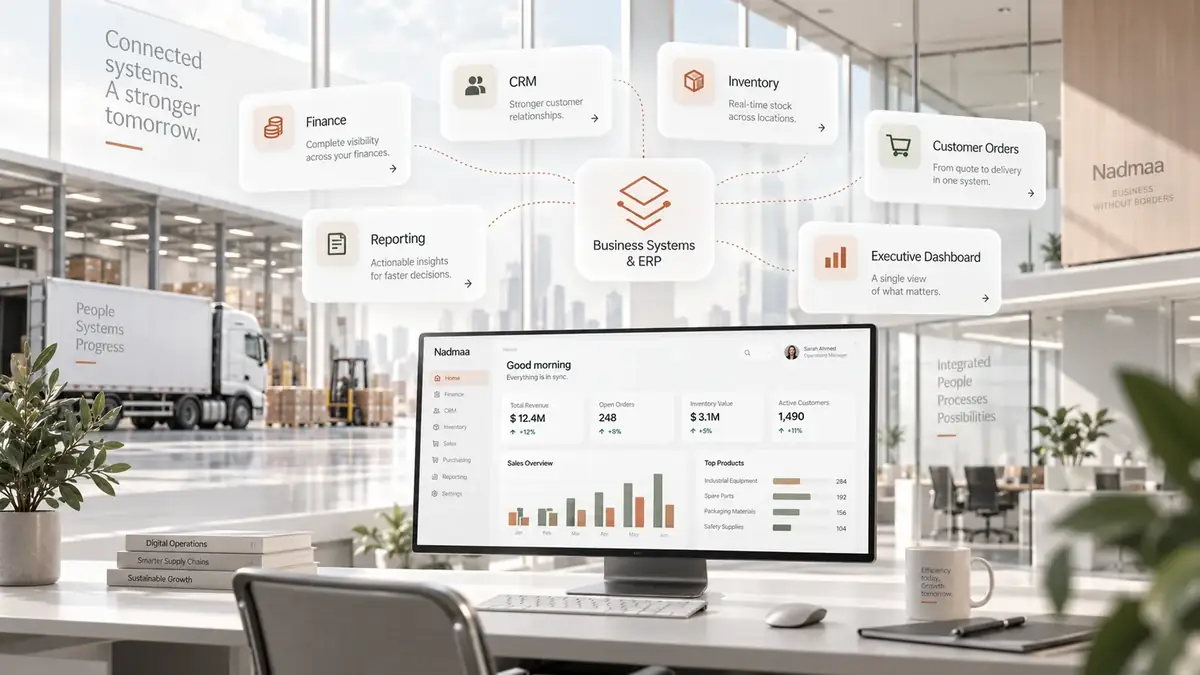
Nadmaa designs and delivers the systems ambitious companies need when growth starts exposing friction. From Odoo implementation to business portals, mobile apps, and workflow software, we create digital infrastructure that makes the business faster, clearer, and ready for its next stage.
Why companies choose Nadmaa
Nadmaa combines strategic thinking, operational depth, and delivery ownership so the result is not just a cleaner platform, but a stronger way of running the business day to day.
The work begins with the real workflow, the real bottlenecks, and the real operating pressure, so the system is shaped around what the business actually needs.
Strategy, system design, and implementation stay connected, which reduces misunderstanding, improves decisions, and keeps the work grounded in the original objective.
From ERP to portals, mobile apps, and workflow software, the outcome is designed to improve visibility, reduce friction, and support growth with stronger operational control.
Core services
From ERP to portals, mobile apps, and workflow software, each service is designed to reduce friction, improve visibility, and support growth with stronger systems.
ERP rollout, rescue, upgrade, and integration work shaped around workflow, reporting, permissions, and long-term maintainability.
Open service page →A structured Odoo engagement covering implementation, rescue, upgrade, and extension so the ERP becomes a dependable operating system instead of another fragile layer.
When disconnected tools, spreadsheet workarounds, risky custom code, or low user trust are slowing the business and leadership needs cleaner control.
We start from workflow reality and technical audit, not a module checklist, which leads to better scope discipline, safer customisation, and stronger continuity after go-live.
Client and internal portals where invoices, receipts, applications, statuses, and documents stay connected to the real operating system.
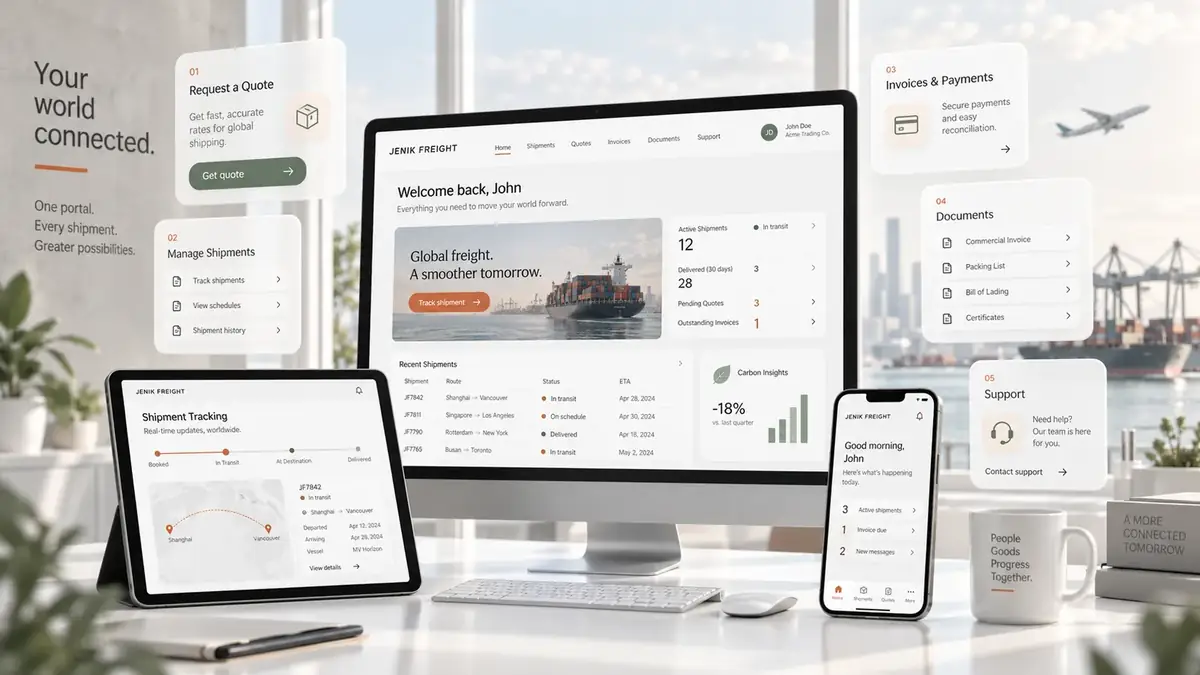
Open service page →A secure business portal for internal teams and clients, with role-based access to customer records, billing items, applications, approvals, and workflow states.
To reduce repetitive support traffic, give customers self-service access, and give finance and operations a cleaner view of what is happening across the account lifecycle.
We design the client experience and the internal process together, so the portal feels polished on the surface and stays operationally serious underneath.
Customer, field, and operations apps delivered with the backend logic, admin tooling, release planning, and integrations they actually need.
Open service page →A mobile product system covering user flows, backend rules, data structures, notifications, admin functions, and launch readiness rather than screens alone.
When the strongest experience needs to live on the phone for customers, field teams, managers, or operational users who need speed and real-time system access.
We define the product logic, the operational backend, and the release path together so the first version is useful in production, not just persuasive in a demo.
Replacement of fragile sheet-led operations with governed systems built around workflow states, approvals, automation, dashboards, and role control.
Open service page →A move from spreadsheet memory to operational software, where requests, approvals, reporting, ownership, and audit trail are structured properly.
When version confusion, manual chasing, inbox approvals, and late reporting are making the process fragile, expensive, and harder to scale.
We replace the hidden workflow behind the sheet, not just the visible interface, so the new system is governed, adoptable, and shaped around real operating logic.
FAQ
These are the practical questions that usually come up when a business is deciding whether to fix a broken system, replace a spreadsheet-led workflow, or scope a larger implementation properly.
Nadmaa is a strong fit for growing businesses that are already feeling operational strain: spreadsheet-led workflows, disconnected systems, weak reporting, low trust in an ERP rollout, or too much manual chasing between teams. The common factor is not industry. It is that the current system is no longer matching how the business actually runs.
You do not need to decide that alone before the first conversation. The right shape depends on where the pressure is. If the issue is operational backbone, Odoo may be the core. If the problem is client self-service, approvals, field execution, or internal access, the right answer may be a portal, mobile app, or a narrower workflow system around the core tools you already have.
Yes. In many cases, replacing Odoo is the wrong move. If the real problem is bad process mapping, brittle customisation, weak reporting, or poor user adoption, a rescue is usually cheaper and faster than a full replacement. The first step is to audit the current environment and separate fixable implementation debt from genuine platform limitations.
Yes, if the migration is handled in phases. The safe path is to audit the live workflow first, clean and map the data properly, validate the new process in a controlled environment, and only then move the team over. The goal is not a dramatic switch. The goal is a governed replacement that removes risk without freezing operations.
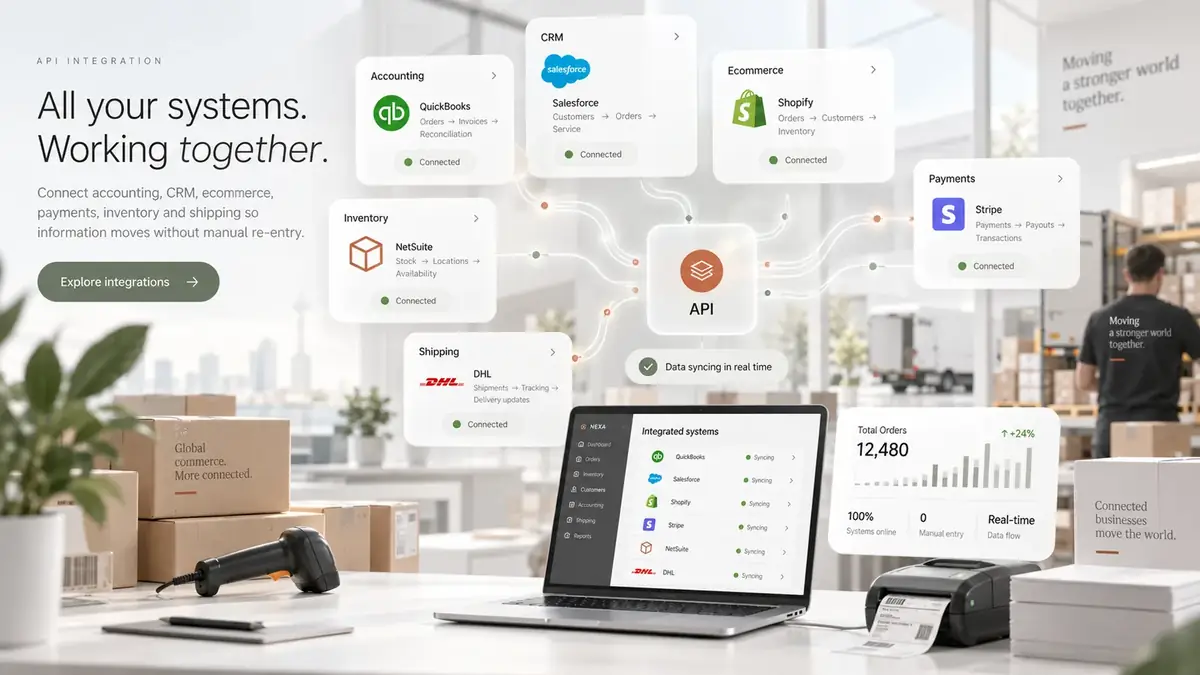
That is usually part of the job. New systems should not create another silo. If you already depend on accounting tools, eCommerce platforms, payment gateways, logistics software, CRMs, or internal databases, the delivery should account for how those systems exchange data and where the source of truth should live after implementation.
The strategy session is used to understand the workflow, the current bottlenecks, the systems involved, the decision pressure, and the likely system shape. You do not need a full technical specification before that conversation. What is most useful is clarity on what keeps breaking, what the team is still handling manually, and what the business needs to see or control more reliably.
Latest blogs
How a connected billing portal reduces late payments by removing invoice retrieval friction, making payment easier, and automating follow-up through the core system.
Read the article →How a well-connected client portal can cut routine support volume dramatically by shifting invoice requests, order updates, and document retrieval into self-service.
Read the article →Next move
The conversation focuses on where the business is slowing down, what teams still handle manually, and what better systems would change operationally.